Challenges in Content Marketing: Overcoming Obstacles to Achieve Success
Introduction
Content marketing has become one of the most effective digital marketing strategies for businesses looking to attract customers, build brand authority, and drive long-term growth. By creating valuable and relevant content, companies can educate their audience, improve search engine rankings, and generate quality leads. However, achieving success through content marketing is not always easy. Marketers often face numerous challenges, from producing high-quality content consistently to measuring return on investment (ROI). As competition continues to increase across digital platforms, businesses must overcome these obstacles to stay relevant and maintain a competitive advantage. Understanding these challenges and implementing effective solutions can help organizations maximize the impact of their content marketing efforts.

Creating High-Quality Content Consistently
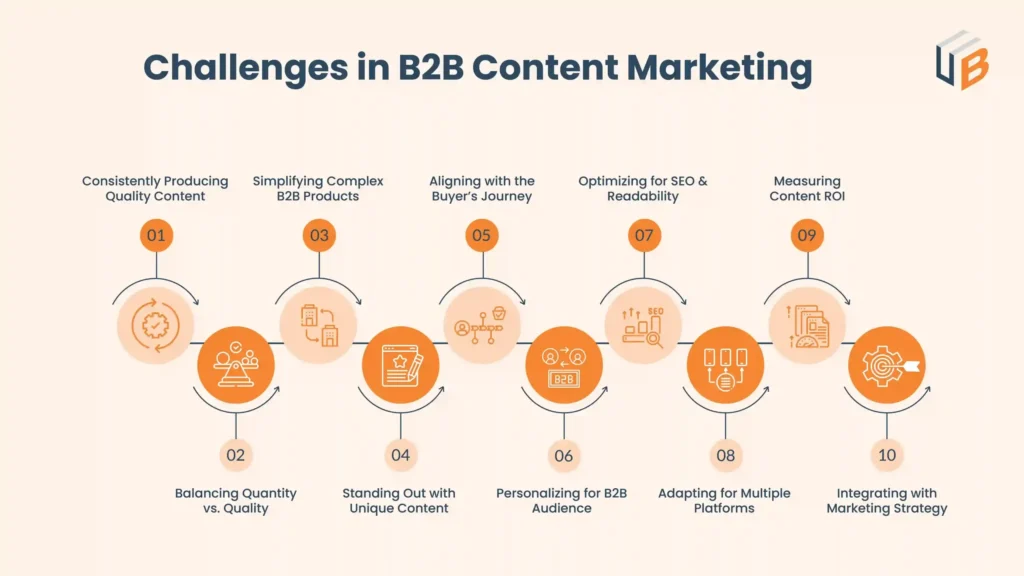
One of the biggest challenges in content marketing is consistently producing high-quality content. Audiences expect fresh, informative, and engaging content that provides genuine value. Creating original articles, videos, infographics, podcasts, and social media posts requires creativity, research, time, and expertise. Many businesses struggle to maintain a regular publishing schedule while ensuring that every piece of content meets quality standards. Publishing low-quality or repetitive content can reduce audience engagement and damage brand credibility. Developing a content calendar, planning topics in advance, and maintaining clear editorial guidelines can help businesses create valuable content consistently.
Understanding the Target Audience
Effective content marketing begins with understanding the needs, interests, and behaviors of the target audience. However, many businesses create content based on assumptions rather than research. Without knowing customer preferences, pain points, and search intent, content may fail to attract or engage the intended audience. Businesses should conduct market research, analyze customer feedback, monitor website analytics, and create buyer personas to gain deeper insights into their audience. Producing audience-focused content increases engagement, improves customer satisfaction, and strengthens long-term relationships.

Standing Out in a Competitive Market
The internet is filled with millions of blog posts, videos, social media updates, and other forms of digital content published every day. This intense competition makes it difficult for businesses to capture attention and differentiate themselves from competitors. Simply publishing content is no longer enough; brands must offer unique perspectives, practical solutions, and original insights. High-quality storytelling, real-life examples, expert opinions, and visually appealing designs can help content stand out. Businesses that consistently deliver valuable and distinctive content are more likely to establish themselves as trusted industry leaders.
Keeping Up with SEO Changes
Search Engine Optimization (SEO) is an essential part of content marketing because it helps improve visibility in search engine results. However, search engines regularly update their algorithms, making it challenging for businesses to maintain high rankings. Techniques that worked a few years ago may no longer be effective today. Businesses must stay informed about SEO best practices, including keyword optimization, user experience, page speed, mobile responsiveness, and high-quality backlinks. Regularly updating existing content and following current SEO guidelines helps maintain visibility and attract consistent organic traffic.
Generating Consistent Traffic
Creating valuable content does not automatically guarantee website traffic. Many businesses invest significant effort into producing blog posts and videos but struggle to attract readers. Limited promotion, poor keyword targeting, or inconsistent publishing can reduce content visibility. Effective content promotion through social media, email marketing, search engine optimization, guest blogging, and strategic partnerships is essential for driving traffic. Businesses should also repurpose content into different formats to reach wider audiences across multiple platforms.
Maintaining Content Consistency
Consistency is one of the key factors in successful content marketing, yet it remains a challenge for many organizations. Publishing content irregularly can reduce audience engagement and negatively affect search engine rankings. Maintaining a consistent posting schedule requires careful planning, teamwork, and resource management. A well-organized content calendar helps businesses schedule topics, assign responsibilities, and publish content regularly. Consistency not only improves audience trust but also signals reliability to search engines.
Measuring Content Marketing Performance
Another major challenge is measuring the effectiveness of content marketing campaigns. Unlike traditional advertising, content marketing often produces long-term results rather than immediate sales. Businesses need to monitor various performance metrics, including website traffic, engagement rates, keyword rankings, conversion rates, lead generation, and customer retention. Analytics tools such as Google Analytics and Google Search Console provide valuable insights into user behavior and content performance. By analyzing this data, businesses can identify successful strategies, improve underperforming content, and make informed marketing decisions.
Generating Quality Leads and Conversions
Attracting website visitors is only one part of content marketing. Converting those visitors into customers presents another significant challenge. Many businesses generate traffic but struggle to encourage users to take meaningful actions, such as subscribing to newsletters, downloading resources, requesting consultations, or making purchases. Strong calls-to-action (CTAs), optimized landing pages, valuable lead magnets, and personalized content can improve conversion rates. Understanding the customer journey and providing relevant content at each stage also increases the likelihood of generating qualified leads.
Managing Time and Resources
Content marketing requires significant investments of time, effort, and resources. Planning, researching, writing, editing, designing, optimizing, publishing, and promoting content can overwhelm small businesses and marketing teams with limited budgets. Outsourcing specialized tasks, using content management tools, automating repetitive processes, and prioritizing high-impact content can improve efficiency. Businesses should focus on quality over quantity and allocate resources strategically to maximize results.
Adapting to Changing Consumer Preferences
Consumer behavior and digital trends evolve rapidly, making it essential for businesses to adapt their content strategies. Audiences increasingly prefer interactive content, short-form videos, personalized experiences, and mobile-friendly formats. Businesses that fail to adapt may lose audience interest and fall behind competitors. Regularly monitoring industry trends, gathering customer feedback, and experimenting with new content formats help businesses remain relevant in a constantly changing digital landscape.
Keeping Content Updated
Content can become outdated as industry information, technologies, and customer expectations change over time. Outdated articles may lose search engine rankings and provide inaccurate information to readers. Businesses should regularly review and update older content by adding new statistics, refreshing examples, improving SEO, and expanding valuable information. Updating existing content not only improves user experience but also extends its lifespan and increases its ability to generate organic traffic.
Conclusion
Content marketing offers tremendous opportunities for businesses to build trust, increase brand awareness, and drive sustainable growth, but it also comes with several challenges. Producing high-quality content consistently, understanding audience needs, adapting to SEO changes, generating traffic, measuring performance, and converting visitors into customers require careful planning and continuous improvement. Businesses that embrace these challenges as opportunities for growth can create stronger marketing strategies and achieve long-term success. By focusing on quality, consistency, audience value, and data-driven decision-making, organizations can overcome common content marketing obstacles and build meaningful relationships with their customers while achieving their business objectives.