The Modern Meta Ads Playbook: How AI, Server-Side Tracking, and Creative Targeting Drive High-ROI Growth
The landscape of paid social advertising has undergone a fundamental transformation. The days of hyper-segmented interest groups, complex manual retargeting webs, and granular audience hacking in Meta Ads Manager are officially over. Driven by global privacy changes, signal loss, and Meta’s advanced AI ad ranking architecture (such as the Andromeda system), machine learning now handles media buying and audience matching better than any human marketer.
In this modern ecosystem, the primary levers for scaling profitable campaigns have shifted from manual targeting to two core pillars: clean server-side signal infrastructure and strategic creative diversification.
This comprehensive guide breaks down how high-growth DTC brands, B2B companies, and lead generators structure, track, and scale Meta Ads today.
1. The Death of Interest Targeting: Why Creative Is the New Targeting
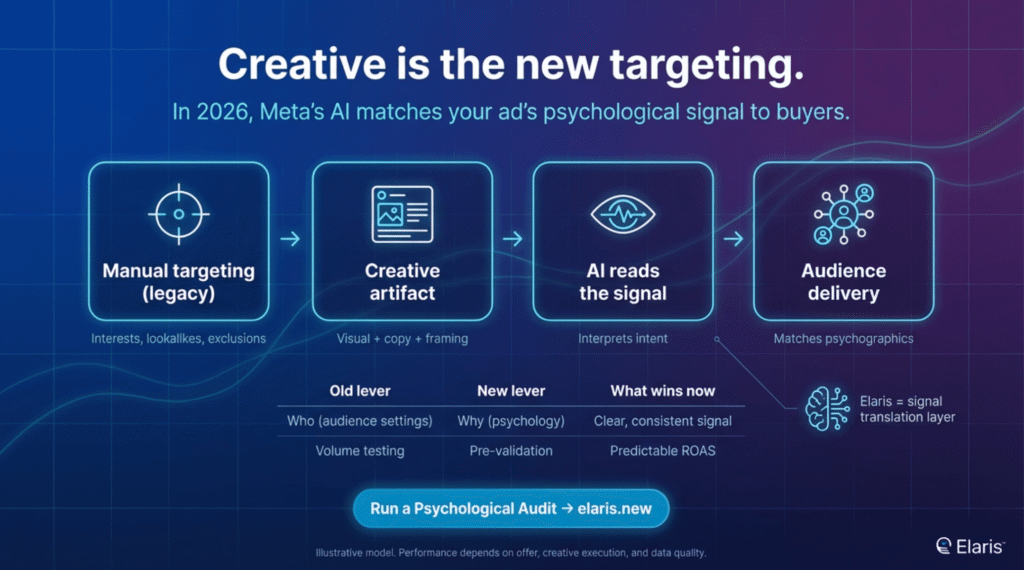
For over a decade, digital marketers relied on detailed interest stacking—combining behavioral behaviors, demographics, and lookalike audiences to find potential buyers. Today, manual interest targeting actively constrains Meta’s algorithms rather than helping them.
How Machine-Learning Targeting Works
Meta’s AI evaluates thousands of ad signals per impression to predict conversion probability. Instead of asking you who your audience is, the platform uses your ad creative to determine who sees the ad.
-
Every second a user watches a video, every image they pause on, and every copy angle they click on sends an intent signal to Meta.
-
If your ad features a selfie video discussing personal injury claims, Meta’s algorithm automatically serves that asset to individuals displaying injury-related search and browsing behaviors.
-
Visuals, messaging, and problem-aware hooks now act as the primary targeting filters.
2. Setting Up the Infrastructure: Conversions API (CAPI) & Signal Integrity
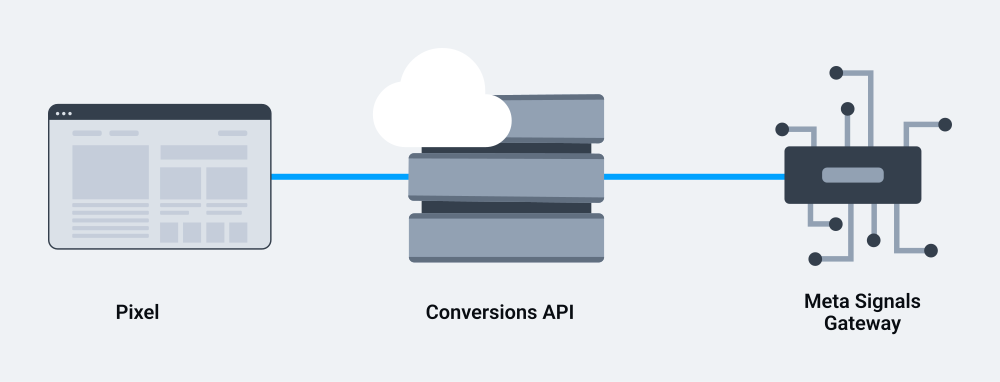
Ad delivery algorithms are only as intelligent as the data feeding them. Relying strictly on traditional, browser-based pixel tracking leads to massive signal loss due to ad blockers, iOS privacy settings, and third-party cookie deprecation.
The Pixel + CAPI Hybrid Setup
To maintain competitive optimization signals, brands must run a dual-tracking system:
-
Meta Pixel (Browser-side):
Captures standard client events directly from the user’s browser.
-
Conversions API / CAPI (Server-side):
Transmits event data directly from your server (or CRM) to Meta’s servers, bypassing browser restrictions entirely.
Key Principles of Signal Quality
-
Event Deduplication: Whenever an action (such as
PurchaseorLead) triggers both client-side and server-side events, include a uniqueevent_id. Meta uses this ID to eliminate duplicate counting while filling in missing data gaps. -
Event Match Quality (EMQ): Pass hashed customer parameters—such as email address, phone number, city, and zip code—via CAPI. Higher match scores directly translate to cheaper cost-per-acquisition (CPA) because the algorithm accurately connects conversions to platform users.
-
Downstream Conversion Tracking: For lead generation, optimize for qualified actions (e.g.,
Schedule ConsultationorQualified Lead) rather than generic form fills to train the algorithm to pursue high-value leads rather than low-quality spam.
3. Account Structure: Simplifying for Maximum AI Efficiency
Overly complex account structures with dozens of ad sets competing against each other cause internal bid auction overlap and push campaigns back into perpetual “Learning Phase” states.
The Modern Account Framework
| Campaign Type | Purpose | Strategy & Setup |
| Advantage+ Shopping / Leads (ASC) | Core Sales Engine | Machine-learning-driven prospecting using automated placement and dynamic creative adjustments. |
| Creative Testing Sandbox | Concept Validation | Simple CBO (Campaign Budget Optimization) campaigns testing 3–5 isolated creative variables against broad audiences. |
| Challenger / Scale Campaign | Scaling Winners | Consolidates verified winning ads from the sandbox to receive 70-80% of total account budget. |
| Dedicated Retargeting (Optional) | High-Intent Recovery | Reserved strictly for warm intent (e.g., Cart Abandoners or dynamic catalog retargeting). |
Strategic Shift: Rather than building separate campaigns for distinct interests or lookalikes, consolidate budget into Broad Targeting (age, gender, location only). Allow Meta’s AI to find conversion paths across the entire user base.
4. Creative Engine: Formats, Hooks, and Social-Native Assets
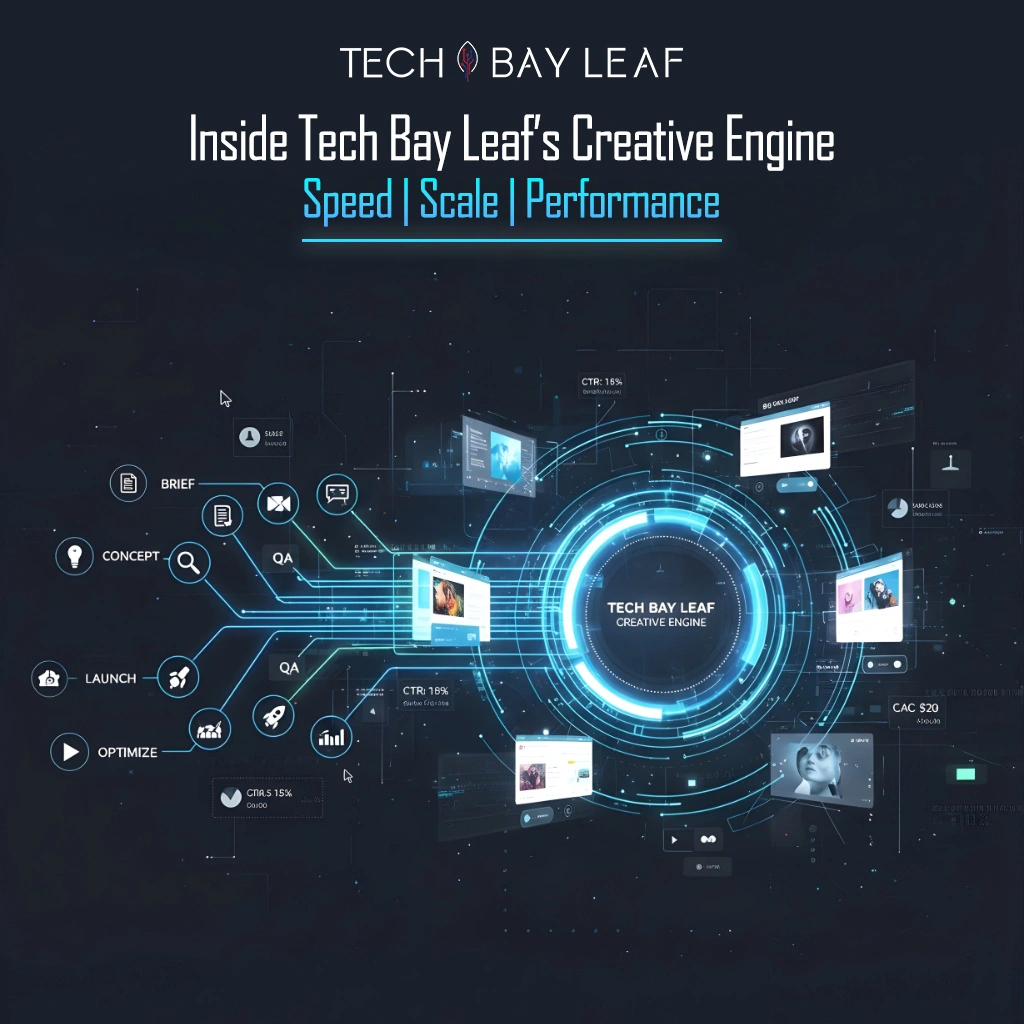
Because visual assets do the heavy lifting of audience targeting, creative volume and diversity represent the highest-leverage work in paid social.
The Priority Placement: Vertical Video
With mobile devices driving over 90% of Meta traffic and full-screen vertical feeds dominating consumption across Instagram Reels, Facebook Reels, and Stories, 9:16 content is the primary format for ad spend.
Social-Native Over Polished Commercials
High-production studio ads trigger quick “ad-scroll reflexes”—users subconsciously recognize branded content and scroll past instantly. Native-style user-generated content (UGC), direct-to-camera handheld videos, and casual screen recordings blend into feed content, yielding higher watch times.
The 3 Essential Video Hook Frameworks
The first 2–3 seconds of a video determine whether an ad succeeds or fails:
-
Problem-First Opening: Address a specific pain point directly.
-
Example: “If you’re spending hours fixing tracking pixels every month, stop doing this…”
-
-
Mid-Conversation Drop: Open mid-sentence as if entering an ongoing dialogue.
-
Example: “…and that’s why our cost per acquisition dropped by 40% in two weeks.”
-
-
Unexpected Visual Contrast: Pair an unexpected visual (e.g., a simple white-board note or handheld demonstration) with clear, punchy copy overlay.
5. Testing, Optimization, and Fatigue Management
Single-Variable Creative Testing
To reliably identify why an ad wins, isolate your variables. When running a creative test:
-
Keep the ad copy, landing page, and CTA identical while testing 3 distinct video hooks.
-
Allow the concept to accumulate at least 50 conversion events before declaring a winner or killing the asset.
Managing Ad Fatigue
When ad performance declines, it is rarely an audience issue; it is almost always creative fatigue. Watch these key signals:
-
Rising CPM-reach (CPMr): Indicates Meta is running out of responsive users within a creative’s pool.
-
Dropping Click-Through Rate (CTR): Indicates the visual hook no longer captures attention in the feed.
The Solution: Rather than recreating entirely new campaigns, supply the existing ad sets with 2–3 fresh creative variations (e.g., a new visual hook, updated text overlay, or a carousel version of a winning video script).
Conclusion: The Modern Meta Ad Stack
Succeeding on Meta Ads today requires leaning into automation rather than fighting it. By combining Broad / Advantage+ campaign structures, server-side Conversions API data feeds, and high-performing social-native video creative, advertisers can build predictable, highly scalable acquisition engines.
Focus your energy on understanding customer psychology, developing creative hooks, and protecting first-party data signals—and let Meta’s AI engine do the media buying.